
Why We Bought a Pregnancy Calendar from the 80s

When my husband and I bought The Pregnancy Calendar this past year, a lot of people had roughly the same reaction:
"Oh… a calendar? From the 80s? Very cool… very… retro."
But once we actually explained how it works — and showed them the product itself (including the OG vintage version) — most people quickly realized that it still serves a purpose in our very digital world. Or at least they politely pretended to.
The Pregnancy Calendar was originally created by my mom, my aunt, and our family friend Julie. Their goal was simple: give newly pregnant moms a tool to understand what was happening in their bodies during one of the wildest journeys of their lives.
You have to remember — there was no internet back then. No phones to quickly Google “Is it normal to feel like you got stabbed in the stomach when you laughed?” Your options were basically calling a nurse friend from college or asking your doctor… who was, very likely, a man.
This is where my mom came in.
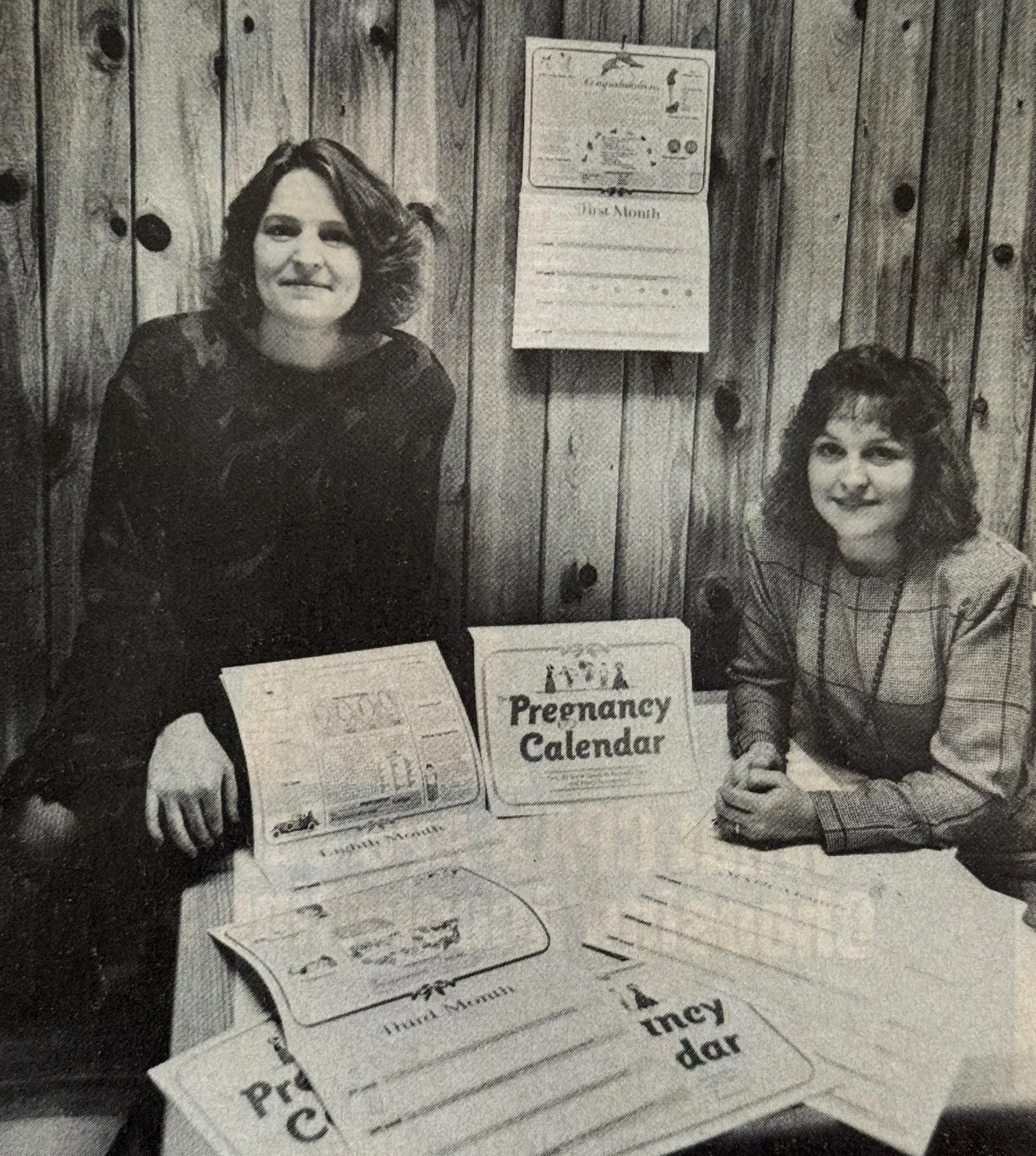
As a nurse, she had the textbooks — and suddenly all her friends were asking her questions. She realized women deserved access to their own information. Something that could help them calculate their due date, understand what was happening week-by-week, track all the weird symptoms (including the stabbing ones), and learn just how incredible their bodies really are.
So yes — it’s always been a sweet keepsake.
But more than that, it was a tool for women to empower themselves, document the experience, and reflect on this massive transformation… because, as most moms will tell you, we forget a shocking amount of it once the baby arrives.
Today, the calendar still serves a similar purpose — just in a slightly different world.
Technically, you can Google almost anything now. You probably don’t need a calendar to explain what’s going on with your digestion, for instance. But in a world where so much of life lives on phones and disappears into camera rolls and cloud storage, there’s something special about a physical object you can hold onto. Something you write in, save, and maybe pull out years later — where you’ll inevitably read about how tired, emotional, and constipated you were.
But there’s another layer to this story.
Beyond being a keepsake, the calendar has become a surprisingly powerful educational tool. Week by week it provides digestible, approachable information about pregnancy — the kind that can feel overwhelming when you’re trying to sort through endless internet searches.
Hospitals, maternal health organizations, and healthcare systems are constantly looking for ways to provide thoughtful resources to expecting families. The calendar gives them a way to do that in a format that feels warm, supportive, and personal — something patients will actually keep on their kitchen counter instead of immediately losing in a patient portal login.
For us, it felt like a product sitting right at the intersection of practical information and emotional connection.
We love that it serves two audiences. On one hand, parents can buy it directly through our website or Amazon as a keepsake to document their pregnancy. On the other, hospitals, healthcare providers, and maternal health groups can use it as a meaningful educational resource for their patients.
And maybe most importantly — it’s a business with heart.
Yes, we’re already busy entrepreneurs. And yes, we have two kids. So naturally our reaction was: You know what would make life easier? Buying another business.
But the truth is, we believed in what this product offers.
If The Pregnancy Calendar can help a parent feel a little more informed, a little more supported, or simply more present during such a huge life moment — it felt worth continuing.
So that’s why we bought it.
Not because we needed something else to do. But because we believed it still had an important place in the lives of growing families.
And honestly, if it helps one new parent avoid Googling “am I dying or just pregnant?” at 2am… we consider that a public service.